Home

yes

Tuesday, 20 August 2013

Three Laptop Cooler Reviews

   The UK has finally seen some sun this summer, so much so the country is experiencing a very rare and unusually long heat wave. Anyone wanting to play on their PS3 or 360 can forget it in this weather, unless that is you want to see the systems overheat and melt before your very eyes. But the same can be said of PC’s as well, whether you use them for playing games, surfing the web or other more demanding work, the weather has made computers all over the country break into a sweat and slow, not to mention cause their users to perspire due to the heat emitted from them.

   Unfortunately for laptop/notebook owners, the heat is somewhat of a more dangerous and pressing issue for their systems as they don’t contain anything like the exuberant and luxury driven cooling systems found in a typical PC. The kind of heat the UK has experienced over the past month has perished most peoples will to hit the on button, yet the UK will continue to experience the high temperatures and uncomfortable humidity for some time, making notebook owners like myself having to limit the use of the computer in case of overheating. I personally haven’t had any issues, but I have been keeping a close eye on the systems temperature gauge, and made a conscious decision not to do anything too demanding on the system, especially during the day.

   So since the start of the summer I have been on a quest to find the best laptop cooler for my laptop, I didn’t expect to buy more than one, but I am now currently on my third, so I have decided to write a review of each one and explain along the way why I have gone through several in a short amount of time. But before I continue I will set out the temperature benchmarks of my computer to show you the reader, just how much of a difference these 3 coolers have made if any.

   During winter and spring, before I decided to get a cooler, I would regularly check the temperature of my CPU using my computers monitoring software, what I found was it ran at about 35 degrees while idle, and around 38 running demanding programs such as a video editor or a game. During this summers heat wave (again prior to getting a cooler) my CPU temperature was around 40 degrees while idle, but 45/46 running games or my video editor. 

The first Cooler I Bought 

Belkin Cooler Stand


   This was the cheapest of the three cooling stands that I bought, weighing in at around £14, and designed for 15” laptops, it also just happened to be the most powerful of the three coolers that I bought. With a convex design that allows it to support a laptop from each corner while keeping the space directly underneath empty, and with the fan centred in the middle of the cooler, it allows the cool air to flow underneath and exit either side of the laptop. The Belkin Cooler Stand rests at a slight angle, propped up by a pull-out stand at the back; this is obviously to allow the fan to take in the maximum amount of air rather than from side vents that you see in other cooler designs.

   This cooler made a noticeable difference to the running and idle temperature of my CPU, it managed to shave off at least 3-4 degrees which I was honestly impressed with. The downside is that this cooler was extremely noisy, with it being comparable to how noisy the original model Xbox 360 was, but then the fan was pretty powerful and did a great job at its main task, cooling my laptop, so there is an obvious trade-off here.

   As good as it was at cooling my system, I quickly returned the Belkin Cooler back to the store I bought it from for a refund as I had a few issues with it. Firstly, the cooler did not like running off my laptops USB port, as it kept powering up and down constantly, so I had to power it from the mains using a USB mains adaptor. I’m not really sure if this issue was due to the product being faulty or whether it was down to the powerful fan and it being a case of my laptop couldn’t or wouldn’t supply it with enough power. The second issue I had, although intermittent, was with the fan itself, it was making a horrible grating noise, presumably from the fan coming out of its centre alignment and scraping the sides of its enclosure.

   I was disappointed that this product was faulty and that I had to return it as it did a great job of cooling my laptop. A 3-4 degree reduction in CPU heat might not sound like a great deal, but for an external cooling device, and one where the fan wasn’t positioned over my systems hotspots, is more than any user could hope for. I would still recommend this cooler though, and if the fan noise is not a big deal breaker for you, then its cooling effectiveness coupled with its cheap price could be a sure fire winner for you. 

The Second Cooler I bought 

Belkin V2 Laptop Cooling Lounge


   This cooling solution was slightly more expensive than the previous Belkin cooling stand at around £20, but has turned out to be the most used and reliable of the bunch thus far. Its not technically a cooling stand as such that’s meant to sit on a desk, but is designed to be more of a lap table that also features a fan cooling system. It is designed pretty much the same as the Belkin Cooling Stand, it has the same shape and form factor, allowing your system to sit on a bed of air, and it is perfectly sized for 15” laptops. The V2 Laptop Cooling Lounge differs in that while the top of the device is plastic, the underneath is cushioned to make it comfortable to rest on your legs.

   I wasn’t aware it was cushioned when I bought it, or that it was meant as a lap desk rather than a proper cooling stand, but I had paid for it so I wasn’t deterred and was willing to give it a go. It quickly became apparent however that there was a significant flaw in the design of this Cooling Lounge, one I find hard to understand how the designers failed to spot. At the back of this device there is a vent system running along the length of the unit, and this is supposedly where the centrally placed fan is meant to draw its air from, or a certain portion of its air. The problem is, as it’s a lap desk, there is a good chance that the fan will be obstructed underneath the Cooling Lounge from resting on a persons lap, which means the fan is starved of air and cant draw a sufficient amount of air through the vent at the back to make the fan effective at cooling, which defeats the point in putting a fan in there in the first place. So as you can imagine, using this resting on a desk to cool my laptop would be pointless, but I found a way to get around this little problem by resting the back of the device on a book to prop it up at an angle, and thus allowing the fan to breath and become effective at cooling again.


   The fan in this cooler is only half as powerful as the one in the previous stand, but it did at least have a noticeable effect on the temperature, but I only noticed a drop of a few degrees. It’s not anything amazing, but during a heat wave such a small drop is more than welcomed, and I guess the fact that you can use this as a comfortable lap desk is an added bonus.
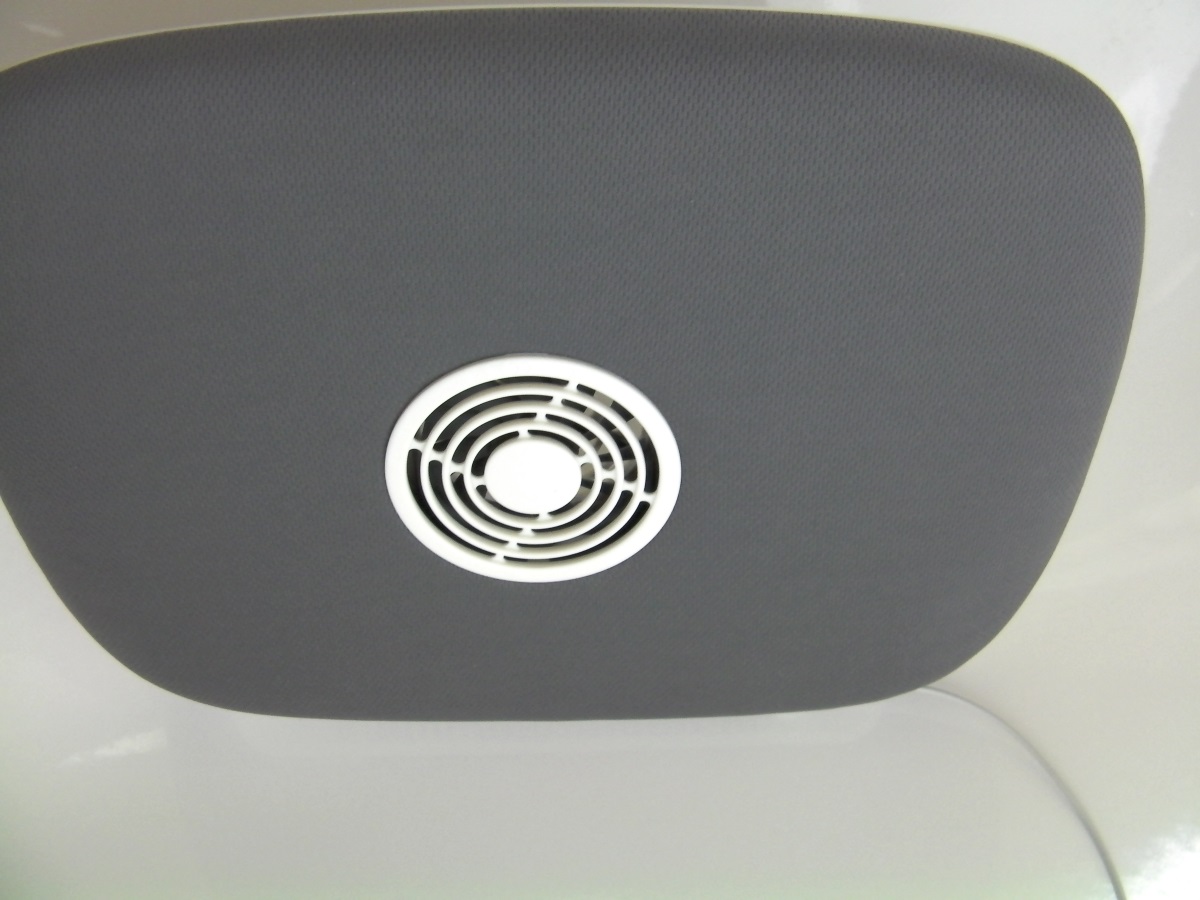

   I have been using the Belkin V2 Laptop Cooling Lounge an awful lot, and once I propped it up I was more than satisfied with the performance of it. But although I like this cooler and haven’t experienced any problems with it, I cant say that it is one that I would necessarily recommend as a cooling solution to be placed on a desk, but I would recommend it if your after a lap desk though. 

The Final Cooler I Bought 

Cooler Master NotePal U3


   Firstly there are two versions of this cooler you should be aware of: the U3 which I’m reviewing here and the previous iteration the U2, the only difference between the two are the amount of fans they come with, the U2 having two and the U3 having three (more on the U2 later.)

   The U2/U3 NotePal design is a pure stroke of genius, there’s no two ways about it, and it makes me wonder if there could ever be a better designed external laptop cooler. The NotePal design is simple, minimalistic and for the most part well thought out, and with the U3 being the most expensive of the three laptop coolers that I have bought at £30, it is (thankfully) sturdy and really well made as it feels weighty and expensive rather than a cheap piece of imported plastic.


   The idea behind this cooler is that it comes with three movable fans, so the user can place each fan under a hotspot or vent on their specific laptop, which in turn helps to cool the system better than other coolers on the market that generally have centrally located fans. Each fan is held within a plastic bracket, and it is the bracket that clips onto the underneath of the NotePal’s aluminium mesh stand. All the fans can be removed from the brackets which is handy, especially where this cooler is concerned, and all three are connected to a fan speed controller that also doubles as the USB power plug. The U3s box says it supports laptops from 17” up to 19” and it is certainly the largest of the three coolers that I have bought, but I found it was fine for supporting my 15” laptop as the rubber pad at the bottom of the stand, coupled with my computers rubber feet, easily stopped it from moving anywhere.

   So you would think that with such a winning design that this cooler would be without a doubt the best of the three and a sure fire winner, well you’d be wrong. This cooler certainly ticks all the right boxes, but than manages to mess everything up in a crucial element of its makeup that would make it all work great. That element is the fans, which frankly are just really crap, they might be whisper quiet, but what good is that when they are significantly underpowered. I’m not sure if they are lacking the power they need to run at their true full speed, or whether they are funning at full speed and are just a rubbish choice of fans to use with this cooler. Adding a speed adjuster to these fans was silly because at maximum speed the fans barely draw enough air through them to move a thread of hair, and when set to minimum speed they are utterly pointless, as you would be more likely to feel a gentle breeze in space than from all three fans combined on this setting. Just how these poor quality fans made it into this unit that has such a great design is beyond me, as from the testing I did with this cooler it made absolutely no difference to the temperature of my laptop with the fans positioned under two hotspots and a vent. In fact my computer ran hotter during the heat wave so I quickly switched back to the trusty Belkin Cooling Lounge, so as you can imagine, this cooler was a real disappointment for me and the least used of all three.


   As it stands I can’t really say I would recommend this cooler, purely on the basis that the key components that are imperative to make it work (the three fans) are useless, so no matter how good the design of this cooler is, its pointless and a waste of money right out of the box. There is a saving grace to this system though, but only if you are prepared to spend another £20-£30, this systems potential can at least be salvaged. Because the fans can detach from the plastic brackets that hold them onto the stand, you can buy your own faster more powerful and effective fans rather cheaply off EBay or Amazon and either try rewiring them up to the NotePals speed controller, or buy a separate speed controller altogether. The other option is to try buying the U2 version of this cooler as I have read in a few places that the fans in that particular model are much better than the ones in the U3, but I have no way of verifying this so buy at your own risk.

Wednesday, 26 June 2013

Xbox 180

   The recent 180 that Microsoft has done regarding its restrictive Xbox One console features and policies has taken many by surprise, not only because no one (including myself) believed they would revise their standpoint, but simply because they seemed to dig their heels in and refuse to listen or budge on the matter in the face of overwhelming opposition and anger. But under pressure, and facing commercial annihilation, Microsoft finally relented and dropped their very controversial restrictions they had so vehemently defended over the past several weeks.

   Gone are the restrictions placed on lending/selling/trading your games, where games were tied to an account and nothing more than pay-to-play licences. Now consumer ownership seems to be restored, leaving consumers to do with their games what they wish, as the system for game ownership and used games will work as it does currently. Gone is the dreaded 24h mandatory software validation, as the console no longer needs the internet to function, though an internet connection is required upon first time setup of the Xbox One console, swings and roundabouts people! The region locking has also gone up in smoke as the console will be region free, good news for importers, that’s if there is anything worth importing on the system that is.

   While this story has a good ending in that gamers have brought about a good meaningful change, just like in the case of the Mass Effect 3 ending, for Microsoft at least, it was a simple business decision born out by simple financial fact: if they didn’t drop the console restrictions and recant, the Xbox One would turn into a financial disaster, one that would only add to the Windows 8 debacle. Microsoft still want to block used games, have an always on machine and have a controlled eco system, but seeing how little pre-orders were being placed for their console, and little interest in it outside of the controversy, they had little choice but to change tack.

Wednesday, 12 June 2013

Microsoft’s Xbox One: Army of None


   Cast your minds back folks to the launch of the Xbox 360, it had a spectacular launch with a bunch of great games. It sold well, and it would go on to do very well over the years, even in the face of the RROD debacle, with many gamers considering their gaming experience on the console so good, they would part with their hard earned cash for a second, third and umpteenth 360 after the one previous overheated and died. Though some publishers have been sadly doing their uttermost to sour that great experience in the latter half of the consoles lifespan, with all kinds of malign practises to bleed wallets dry from what were (up until that point at least) loyal customers. It’s a shame that Microsoft (MS) has had such a hands off approach to these practises been implemented through software on its platform, when discontent about such things have been growing since their inception into the marketplace. But then after recent events surrounding MS Xbox One, a hands off approach was probably for the best when all’s said and done.

   Anyone thinking that MS has all of a sudden dropped the ball with its new console is much mistaken, for in the hallowed halls deep within the company, all has not been well for a long time, the ball was proverbally dropped many moons ago. To see just where they went awry you have to look at the Xbox 360 and a lifespan that can essentially be split up into two half’s: pre-Kinnect and post-Kinnect. Pre-Kinnect MS was pushing gaming first and foremost and making sure that the 360 delivered the best gaming experience the ‘hardcore’ gaming crowd could want. Sony was on the back foot, 360 exclusives were plentiful, XBLA was coming into its own, indie games were to add another dimension and XBL was generally the place to be for hanging out, co-op and multiplayer. Its not like the whole all-in-one media box idea appeared out of nowhere with the Xbox One either, as MS wanted to bring the media side of online computing (films, TV, music) to its console by having the 360 be the best media streaming box out there. But of course, the media streaming side of the 360 was always a healthy distant second to gaming, which is the way it should have stayed.

   Things would change however when Nintendo’s Wii console really started to take off, so much so Nintendo’s machine was vastly outselling all competition, and supply couldn’t keep up with demand. The buzz words were definitely in, and they meant money, lots of money, ‘motion controls’ were now where all the action seemed to be, and MS and Sony both decided they needed to show up to the party. The only problem was, they both showed up late, to a party they were not invited to, and to one which their friends and supporters were trying to reason that they had no business even being present at let alone considering going to. But some companys in the gaming industry are adamant they know best, even when their target audience and loyal customers say otherwise and show evidence to the contrary (Mega CD, 32X anyone?)

   In the end Sony’s motion control aluminous vibrator shaped sex toy inspired ‘Move’ for its PS3 moved about as much as the PS2’s EyeToy. In the end with gamers on the platform showing little to no interest in it, Sony quietly let it slide away to the back-burner rather than keeping it going with a dose of Viagra and pushing it upon everyone, right move Sony! MS twat inspired Kinnect made for wealthy sized living rooms, that wouldn’t actually work in anything less than a grand hall faired much the same fate, as gamers the world over gave the unwanted add-on the two fingered salute and opted not to swirl their hips in front of TV’s and look like tits in front of their mates. The only difference here is that MS refused to acknowledge one of gaming’s most sacred commandments that never ceases to be proved wrong, ‘Thou shalt not covet thy console with add-ons,’ as they refused to let the Kinnect die off with some dignity still etched to it. The company has done less than stellar for the 360 and its loyal user base post-Kinnect, and has choose to neglect the consoles core experience (gaming,) in favour of continually flogging a dead horse (the Kinnect,) and concentrating merely on its media and social capability’s above all else.

   While the Kinnect may have proved a hit in technology and science labs the world over for its practical uses and implementation in new and forward thinking technology, for 360 owners, there was just no point in owning one. There were and still are no games for it that make it a must have worthy of owning, and further more it never worked as well as MS would have had everyone believe. Besides that, the motion control bubble was ready to burst, and burst it did as people realised that the technology in use was less than precise on any of the consoles than the big three would have us all believe, as well as developers poorly implementing and tacking on dreary control mechanics to games. The motion control bubble was brief and rose-up quickly, but like a night out of too much beer and merry making, once it was all over, the sobering realization dawned that it wasn’t all that great and practical for gaming after all. So with the Move and Kinnect arriving so late, gamers realized that adding these add-ons to their consoles was not in their best interests as they added nothing to their systems but a wasteful expense that they could do without.

   Now fast forward to today, after years of complacency and a heavy media focused strategy, MS have come out fighting with the Xbox One, with a console reveal of, well, a much meatier media focused strategy, oh and Kinnect 2.0, yay… anyone? But some would say that MS complacency of the last several years has now morphed into outright arrogance, as many loyal Xbox users that have been around since the original Xbox now feel rightly angered. We all know that they have announced 15 exclusive games for their new system, but does anyone care in the face of having draconian restrictive features built into the Xbox Ones hardware to limit and control our gaming experience at the end of an iron first? Well it would seem not if the massive backlash that erupted after MS conference is anything to go by.

   Many companies today listen less to their consumer base, if at all, and instead try and bend and mould their customers to their will, even when it’s contrary to everything their customers want, it’s like the New Coke debacle of the 80’s never even happened. Yet these same companies scratch their heads with confusion at any backlash and failures that inevitably head their way as a result, and no more so than those companies that are in the gaming industry. From EA and Activision wondering why they are hated so much, to Capcom and Square Enix wondering why they are beset with poor sales performances. Hell, even MS with Windows 8, the OS that nobody wants, and the soul reason why PC and Laptop sales have dropped off the map and into oblivion as soon as every PC came packaged with their Metro OS. MS fundamental problem at the moment is that they are not listening to customers, hence much of the backlash over Windows 8 and the Xbox One. In the end, they have a certain vision, and to them it matters not that people don’t want or understand their vision and products, because they are banking on being able to bend consumers to their will and consumers giving in without a fight. So it comes to pass that rather than reject any and all notion and implementation of much of the shallow practices that have plagued many games of this generation on the PS3 and 360, much of which has angered gamers over the years, they instead choose to embrace it with open arms, much to the sinister delight of EA.

   With the Xbox One, there will be no such thing as game ownership as we have always traditionally had it, that’s something that will be consigned to the past, replaced instead by licences that will last only as long as the console does or the publisher sees fit to support them. The disks you will pay £40-£50 or more for will be nothing more than licences to play games and in no way will the consumer be paying to actually have any ownership rights over them. A physical disk and case will be nothing more than a delivery system, worthless and useless bin material after a game has had its mandatory hdd installation. The disk cannot be used afterwards to resell or to lend out to friends and family, it will be an empty vessel, and the licenced game will now reside on your hdd and locked down to your account. To lend the game out to others would mean giving others access and or control over your account.

   Since the disastrous conference however, MS have been busy doing its utmost to save-face, backtrack and allegedly pay companies to work damage control limitation on their behalf after the massive backlash its received. So now its emerged that they are shifting the heat onto publishers by saying that the no used games restriction is an optional opt in/out scheme, and its up to publisher whether to restrict the re-sale of their games or not. But at the end of the day they are still building that feature into their console, and the games are still licence to play games. They have also said you can play a game licenced to you on another Xbox One console when signed in with your account, but will only be able to play for one hour and that’s your lot. If the thought of that wasn’t enough to excite you, then how about the console needing to connect to the internet once every 24 hours to scan and verify the console and software, and no connection means no gaming at all.

   The reasons MS have given for doing this are the same old bullshit publishers such as EA tried to rational the practise of locking out parts of game content stored on disks. Where by a game bought brand new would need to be registered, meaning access to all content on the disk was available to the first time buyer. However if the game was then sold or lent out, the second-hand buyer or lender of the game would have to pay a fee to unlock a segment of the content on the disk, which in this publishers case was typically the multiplayer part of the game, but other publishers have worryingly started to lock out parts of the singleplayer portions of games. These practises, we are told, are to give publishers and developers a cut from any used game sales, as the used games market is supposedly crippling the industry in ways we just cant imagine, as well as the fact that many companies in the gaming industry today believe they have a right to take a percentage made from any used game sales. The former has been well and truly disproved over the years, just the fact alone that the used games market has always been around since the inception of gaming just proves its less harmful to the industry than the big publishers would have us believe. The latter really comes down to content/software ownership, if you pay for it does that mean you own it and can lend or sell it, or does it just mean you are temporarily licencing it, this is an issue that has only heavily come to the fore over the last 4-5 years and was never such an huge issue in the past as it is today.

   The problem here is that this is the clashing point were publishers/developers and consumers meet in gaming, and things look set for a showdown with the Xbox One being the defining battleground for the future of console gaming. Gamers/customers want to own what they pay a lot of hard earned money for, as apposed to paying loads of money for something they don’t (a licence to just play a game.) They also feel it is their right as consumers to then be able to do what they wish with their games afterwards (sell, lend and trade,) much as they have always done with video games and any other worldly goods since the passage of time. Some (not all) publisher/developers want games to be nothing more than a temporary paid for licence, to be pulled at a later date or at their convenience. In this way they would force everyone to buy a new game (or licence) at full price as the used games market would effectively be wiped out; this way they will have ultimate control over what they at this present moment do not. MS obviously shares in this licencing dream held preciously by the likes of EA, who recently abolished its hated practise of content blocking licences, claiming it had listened to feedback. Funny then how they went on to pull out of making games for the Wii U completely, and that such an announcement coincided with the Xbox One reveal. But no ones really that fooled, as everyone and their mother knows it’s because they can’t force their no used games market dream on the Wii U or current gen consoles. If publishers and certain console manufacturers such as MS can ultimately control the whole facet of the market place, it would freeze out consumer freedom and market competitiveness, and the big companies would be in a position to monopolise and control price, delivery and freedom at their whim.

   I don’t know about you, but this prospect doesn’t sit well with me, and I have never been so unenthusiastic and discouraged about an impending new generation of console ever. MS dream of an ideal console future in their eyes is an oppressive Orwellian one in mine, and one I won’t support. Every facet of the Xbox One that MS are championing is a restriction and an obstacle, and every carefully worded statement and press release by them won’t hide that fact. Console gaming has always been about simplicity, ease of use and fun, all three things that the Xbox One is definitely not. It’s a shame MS have messed everything up so bad, but that’s what happens when you don’t listen to your own customers, the Xbox One is DOA (to me at least,) and now Nintendo and Sony have everything to play for.

Thursday, 23 May 2013

What’s In the Box? Alone In the Dark Limited Edition Xbox 360

   Released in 2008 for the Xbox 360 and PC, with an altogether different version released for the PS2 and Nintendo Wii that same year, (though with a similar plot line to the 360/PC versions,) the game was embattled by a mixed reception from critics, which then ended up in a mire of controversy. But no matter what axe Atari and the review critics were trying to grind with each other at the expense of gamers no less, the game itself got buried between the two parties, shame really because if both parties had stopped trying to score points off of each other, this great horror game might have reached greater success. 

   Alone In the Dark 5 (or 2008, not to be confused with the original game of the same name) was actually a really great horror game that sadly few have bothered to play, though it did apparently sell quite well. Its surprisingly one of the better horror games of this generation, more so than the very dismal Resident Evil (RE) offerings that have been served up to disenchanted RE fans. This game can be bought at a super cheap price, and it’s worth every penny, so if you have the chance to grab a copy then do so, you’ll enjoy this game.


   This Limited Edition version was only available to European gamers, and only available through the video games retailer Game here in the UK, so if anyone in the US likes the look of this then you will have to import it. 

Alone In the Dark Limited Edition Xbox 360
Contents; 

Game
CD soundtrack by Olivier Deriviere
Making of DVD
Edward Carnby figure
Hardback art book

Thursday, 2 May 2013

The SNES-CD

   In the early to mid ninety’s Nintendo and Sega were going head to head with their respective 16-bit consoles for the hearts of gamers across the world as they each sort to dominate the market. In 1991 Sega released the Mega CD add-on which took advantage of the new medium of the future the CD, as they sort to expand upon and widen the Mega Drives range.

   Nintendo already had previous experience with add-ons as they had already ventured down this well worn path with the Famicom Disk System for the Famicom (NES.) This add-on was never released outside of Japan because it wasn’t a resounding success amongst other factors, such as piracy and unreliability to name a few. But Nintendo wanted to compete and take advantage of this new storage medium that offered so much more potential to gaming, and so they approached Sony to produce what would be dubbed the SNES-CD.

   Sony, having experience with this new CD-ROM technology, and Nintendo having used the Sony SPC-700 processor for the SNES sound output, it seemed like a natural fit for both companies. But it was mostly thanks to the relationship built between Nintendo and Sony through engineer Ken Kutaragi that such a processor was created and used in the SNES, and that there was even an open channel for dialog between the two companies at all, as Sony management didn’t like being bedfellows much with other companies at the time. So it come to pass that with a prior business deal, and a mutual business relationship (of sorts) well established, the two companies agreed on a deal.

   Where things fell apart, essentially dooming this add-on never to see the light of day on a production line, is essentially when the powers that be at Nintendo HQ realised that the contract they had signed off on with Sony for the SNES-CD, also handed complete control of all software produced on it to them, freezing Nintendo out of retaining control of the software. With the Nintendo top brass less than happy with this seemingly one sided venture, they secretly formed a deal with Philips and put a stop to any further work on the SNES-CD with Sony. At the 1991 CES (Consumer Electronics Show) Sony announced that it was working with Nintendo on the SNES-CD add-on. But the following day Nintendo announced that they wasn’t working with Sony on the CD add-on for their 16-bit console, but instead had formed a deal with Philips. Sony was left red faced with embarrassment at their announcement the day before as Nintendo had neglected to tell Sony that the SNES-CD deal was dead in the water.

   Sony could have killed all further work right there and left the video games industry to itself, but with a few different prototypes of the CD add-on produced, they decided to further research and develop the project and release a standalone CD-based console themselves. They eventually ended their on-going tumultuous relationship with Nintendo and went onto release the PlayStation, and the rest they say is history.

   Although it can be said that if Nintendo had read the contract they had signed with Sony properly, then it might not have been signed in the first place. Or perhaps it would have been amended to allow Nintendo to retain control and rights over all the software for the add-on, there for it would have been signed, and the SNES-CD would possibly have been produced. Both these could have kept Sony out of the console hardware business that it ended up being the dominant leader in, but the truth is, it was Nintendo backing out and backtracking on their original agreement that caused Sony to further its development into a standalone console that would become the PlayStation. If they had honoured their contractual agreement with Sony for the SNES-CD, their decision to pull out and embarrass Sony (whether intentional or not) wouldn’t have come back to bite them, as they would slip into second place in the console market with the N64, and then third place with the Game Cube, all as Sony remained at the top spot with its PlayStation consoles.

Wednesday, 6 February 2013

El Shaddai: Ascension Of The Metatron Review

   El Shaddai is easily the best platformer I have played since the likes of Sonic the Hedgehog on the Sega Master System, which is a game I honestly never thought would be equalled in the genre, let alone surpassed. I have of course enjoyed many platform games over the years since, but while many are and were brilliant, none of them have come close to matching Sonics first Master System outing. Until that is when I finally played El Shaddai, a platformer that didn’t equal it, but surpassed and smashed it. Yet I have found myself staring at the box for the best part of ten minutes before starting work on this review, just contemplating on how best to go about reviewing this game. I have never felt daunted at the thought of reviewing any game, or felt so lost on how to approach one, but I find myself in just such a position with this amazing title. Not because its bad, or because I don’t understand it, but because it has overwhelmed my expectations of it by breaking free from shackles of decades old tradition, undermining my tired notion of what a platformer should adhere to be, while leaving me unable to wrap my head around various parts of it and quantify the game into a neat tidy label at its spectacular conclusion.


   El Shaddai is a game inspired by religion, taking much of its inspiration and story from the Old Testament and The Book of Enoch in particular. It is inspired by all the great stories, myths, places and people found within, and you will see and hear this religious Judo Christian influence throughout the game as it is the makeup and binding force that makes the game what it is. Apart from its Jewish and Christian influence, you will also come across others in the mix as well, Buddhism and Hinduism for example, though not nearly as strong they are clearly there, in some chapters they are apparent in the visuals, in others the music, but they are woven in there and are rather more subtle. Don’t think of this game as one that wears its religious influence on its collar and tries to force some belief upon you as that’s not what this game is about. Think more of ancient history and some of the old myths and stories, as the developers take that Old Testament good story telling aesthetic and feel and make a game influenced from it, and an amazing job they have done to, as El Shaddai feels like an ancient story about God, Angels and Man, one that doesn’t feel at all out of place.


   The way in which the story is told and presented also does it in such a subtle way that follows the ancient astronauts theory that God and Angels are, or were, extra-terrestrials, aliens if you will, who came to Earth, created mankind, had a plan for their creations and influenced their development throughout history. Furthermore heaven and hell are different areas where they preside and Enoch’s (Enoch is the main protagonist in the game) weapons from God as well as other things are nothing more than alien technology that ancient man interprets as god-like instruments. This isn’t something that is openly suggested or put to the player in any way, its just a subtle thing that’s there that is open to interpretation by the player. Whether this was intentional by the developer or whether I’m just projecting my beliefs upon the game and its story I'm not entirely sure. But what’s cleaver is that the game in itself can be left to this kind of interpretation by the player, (perhaps because of the religious theme and story, and religion itself being open to many ways of interpretation itself,) and what one may see within it may be different to what someone else will interpret from it. Again whether this aspect of the game and its story was an intentional element or not is anyone’s guess, but it’s certainly a unique and interesting side to the game I haven’t come across before.


   The story goes that God has a purpose for Man, one that was put into place when he created mankind and placed them upon the Earth. God appointed his loyal angels, the Grigori to watch over mankind from Heaven, who over time had become besotted and captivated by the lives of man. They eventually descended from the Heavens and lived amongst man, influencing them and procreating with those they once watched over. The Fallen Angels corrupted man with sin, causing them to deviating from the plan God had laid out for them, creating a false path for man to follow. Angered by the Fallen Angels betrayal of God, the Council of Elders in Heaven decided that the only way forward was to wipe the Earth clean of man corrupted by evil and sin by creating a great flood upon the Earth. One man, a scribe named Enoch brought to Heaven by God, pleaded before the Council of Elders against flooding the Earth. They agreed to spare mankind on the condition that Enoch returned to Earth, find the Fallen Angels and bring them back to Heaven to face Gods judgment. So Enoch returned to Earth on his quest, guided by the Archangel Lucifel, he must find the Fallen Angels and cleanse man of their sin.


   El Shaddai is a 2D/3D hack-n-slash platformer, it seamlessly blends both 2D and 3D platforming elements together to such a degree the game has nailed the formula with its first go. In this game the transition between the two different perspectives has quite literally been worked to a fine art. One minute you will be in the 3D perspective, often with the viewpoint from an interesting angle, running, jumping and fighting enemies, then before you even realise it’s happened the perspective has stealthily transitioned into its 2D side on form. Its not always as subtle as this, there are of course parts that are all in one perspective or the other, but when the game transitions so seamlessly, it makes you wonder why it hasn’t become the norm in the genre already as it feels so naturally done.


   Each level is a varied mix of elements always changing as the game progresses, keeping things fresh and making sure the player can always expect the unexpected as far as level design goes. Some of the 2D parts are designed in such a way that they are superbly geared for speed runs, where a player is supposed to become so finely tuned into the level that they smoothly glide Enoch through it with ease. Other 2D parts are slower and perhaps a little more traditional in their makeup, these platforming parts are about being more careful and are certainly slower paced, having you fight enemies, avoid many of the pitfalls, lurking dangers and timing those all important jumps. The 3D parts can follow the same route, with levels designed for speed flow, with others about meticulous precision platforming and danger avoidance.


   The 3D parts however are where most of the games hack-n-slash fighting will occur, but rather than force the player to fight for every step en route, down narrow corridors and from one large area to the next, the fighting will take place in rounded type sections effortlessly blended into parts of the levels. You will quickly learn to identify these little areas dotted about each level, and upon entering them they become like small arenas, fenced off until you have defeated all of the spawning enemies or the end of level boss. Some players might not take to the way in which the developers have choose to implement the fighting in such a way like this, and I must admit it sounds more detached than it actually is, more so down to my inability to quite put this game into words than anything else. But believe me when I say that this really does work more in its practical implementation than it sounds, as El Shaddai is a game where all its sum parts seem to blend and flow together, fitting perfectly, and this particular area is no exception. You do of course face some enemies en route through the levels, but these are nothing more than fodder, they are there specifically to pose as an obstacle, to knock Enoch off his footing and into danger, nothing more nothing less, the real enemies lie in wait in the arena type areas.

   Combat is pretty simple, just as you would want it to be, with two buttons for two different types of attacks which when held down will make Enoch dispense more powerful variant attacks. Special attacks can be implemented by pressing RB and X, and later in the story a special overboost attack bestowed upon Enoch by the Archangel Uriel can be used when your boost level is full and by tapping LB and RB. Enemies can also be whipped up and attacked in the air and dealt multiple hits to wear them down, as well as being attacked on the ground by a hovering Enoch, allowing him to go on the offensive yet avoid any ground based attacks. There are no special powers as such in this game bar the overboost, and there are no over flirtatious and exuberant combo’s to endlessly string together that you find in other such games like Bayonetta and Devil May Cry, nor can you collect, assign, build or equip different powers and power-ups. As far as the hack-n-slash fighting element is concerned, El Shaddai takes things back to its core roots, keeping things simple, uncomplicated and minimalistic. But this does not suck the fun from the games veins, far from it in fact; the game is just as fun and challenging as any combo power-up driven game in this genre. Stripping the excess from this area has made the fighting in the game feel fresh as much as it is in keeping with the style and flow of the game, while also ensuring the fun and challenge remain intact.


   There is a blocking system in El Shaddai, but it’s tricky to implement and will take some time to master and pull off. Blocking is split into a two tear system, holding RB will block some attacks but not all depending on the enemy and how they attack you, and you will still take damage here, but not as much. Tapping RB just before an enemy strikes Enoch will repel their attack and leave your foe off guard and open to attack so timing is everything. The blocking system in this game is partly like the one implemented in the melee survival horror game Condemned released by Sega back in 2005. Condemned, (while in the first person perspective,) also relied on perfect timing to block enemy attacks that when successful would repel enemies and leave them off-guard. The only difference between the two games being that Condemned didn’t have a two tear blocking system like El Shaddai.


   As well as being able to throw punches and kicks when finding himself without a weapon on rare occasions, Enoch has access to three different weapons through most of the game, though he will start off with one and the other two will become available when the game progresses. The Arch, Gale and Veil are the only weapons in the game and the only ones Enoch can use, each one very different to the other, with each better suited to different situations and enemies than the other, and each assigned its own unique special attacks. The Arch is like a Klingon Bat’leth, yet sounds exactly like a Lightsaber and is swung about like its essentially a sword, it’s the go-to weapon of the game that I found myself using the most as it also has an air glide ability when Enoch jumps, which come in pretty handy for all the platforming elements of the game. The Gale is a long range weapon akin to the bow and arrow, circular in nature like Xena: Warrior Princesses Chakram weapon, but with tiny metallic bolts that circle Enoch which he is able to control and fire in any direction. Finally the Veil, a weapon that is made up of two shields, one on either hand that are both used to pound enemies into submission. This weapon is the most powerful of all three, allowing Enoch to deal the most damage, but its trade-off is that it’s slow and cumbersome, leaving Enoch more open and susceptible to being attacked.

   There are a variety of different enemies in the game, and as you progress further you will start to encounter more powerful and challenging enemy variants, but the three core types are ones that use Gods three weapons. You won’t encounter them all from the beginning of the game; they will appear in battles once you have reached a point where another of Gods weapons becomes available to Enoch as the Arch is the only one available to him at the start of the game. They also become more powerful and challenging throughout the course of the game, so an Arch wielding enemy of Sin might pose a challenge and become easily conquered at the start of the game when you are getting to grips with things, but a faster, more powerful and nimble Arch wielding enemy will take its place in another chapter, and the same can be said of the other enemies.


   The highlights of the fighting are the many different boss encounters you will face in the game, all of which are varied, different and always surprising. At first you will never know whether you are in a boss fight for real or not, or at times whether you’re facing a mid-chapter boss or end of chapter boss as they can pop up and challenge Enoch at random. These seemingly random challenges will make short work of Enoch before transporting him back into a level, and serve as an element to keep you always second guessing which encounter will be the actual proper fight. As always in these kind of games, you can expect variety in the boss designs, the weird and wonderful, with multiple stages of attacks and attack patterns to learn and overcome, with each harder and more difficult than the last. My favourite boss encounter has to be Armaros, as it was not like any boss fight I have encountered before, with the seamless transition between cut-scene and gameplay, Armaros dancing in the foreground up against the TV screen as though he was dancing for a camera, and having Enoch fight dancing enemies in the background. To say this boss encounter was different and surreal is an understatement, and although Armaros might not have been the most spectacular and all conquering boss fight in El Shaddai, or in gaming history for that matter, it was surly the most memorable and stylish to ever be conceived.


   With all that said and done there are but only a few things about El Shaddai that I found to be amiss, nothing major or significantly game changing, just a few very small things, as the game is pretty much as polished as you could hope for in a game on todays current systems. You can either play the game with Japanese voice acting with English subtitles (much better and preferable to dub in my opinion,) or English voice acting and turn subtitles off, or set them to Japanese. The problem with the English voice acting doesn’t rest with the acting itself, as the voice work in the game is superbly done, but lies with the lip-sync, as is common with dub, it can be out of sync and noticeable. This shouldn’t be a problem in games really as the lips for in game characters and cut-scenes can easily be synced to the voice, but in El Shaddai it hasn’t been done, at least not in a way it should be done with a game, but more like English dub you will find in movies. It’s not all that bad, but it is noticeable in the cut-scenes, you wont notice it in the game though as the camera is to far away from the characters.


   The only other complaint is that when you get caught in an enemy attack, or stringed attack, it’s almost if nigh on impossible to break free. Once enemies get hold of Enoch and whip him up into their attack patterns, then he is essentially locked in for the duration until it’s over, so no matter how you try and break free, you just have to accept the punishment and wait until it’s over. More than anything else this is just frustrating; it’s not a bad mechanic, its just punishment for not successfully blocking in the first place or dodging an enemy move.


   The game didn’t leave me furrow browed, more like slack jawed, I appreciated every minute of it, yet was left with my head wrapped within its meandering story and gameplay. You don’t play El Shaddai, as it’s not a game to be played; you experience it, as it’s a rare gaming experience that doesn’t come around too often. El Shaddai is a game to be seized upon if given the chance to play it, as it’s not often a game ebbs and flows so serenely, yet will always keep you second guessing every twist and turn of your journey through it. El Shaddai extends its hand to you, offering a journey and an experience, where story and gameplay are inseparable and intertwined, one indistinguishable from one another. If you have reached that point where you truly crave a unique gaming experience set within this familiar of all genres, which is not constrained by its formulaic tradition and rules, then you may want to extend your hand to.

   I’m hoping that if anything I have at least peaked your interest in El Shaddai, enough to make you want to give it a go, as I could have wrote at length about the graphics, but I think the screenshots will speak for themselves, so let’s just say the visuals are quite breathtakingly beautiful. I have tried my best to put into words as much as I could and give you, the reader, a simple understanding of what to expect from the basic makeup of this great game, but El Shaddai can’t be fully explained. Its like that one thing that’s always on the tip of your brain, but you can never fully grasp and pin down into words; it’s always just out of reach, which is why it can only be fully understood by experiencing it for yourself.

Sunday, 13 January 2013

Nintendo 3DS XL First Impressions

   I’m not going to bore you by listing of the specific spec’s of the 3DS XL as they are well known by now and anyone wanting to know these just needs to use a search engine, but I thought as I have recently bought the system I would do an overview and give my initial impressions of it.

   The system comes packaged in a small unassuming box with less fanfare splashed across it than a supermarkets own brand of cheap biscuits, and I was surprised that it didn’t have better design work on it to be honest, but then its what’s inside that really counts. Included in the box with the system is a 4GB SDHC memory card which comes installed in the SD card slot and a pack of AR cards to use with the AR Games software on the system. There were two things however that immediately struck me before I even opened the box. Firstly the notice that the 3DS XL does not come packaged with an AC adapter to power and charge it, as these are sold separately. I have to say this is poor form on Nintendo’s part and is a small blight on what is an amazing system as it should come packaged with a power supply no arguments about it.

   When I was initially looking at buying the system I wasn’t sure if my DS or DSi XL charger would work with it, and its fortunate that I already owned these systems and had chargers for them as I discovered later on that my DS Lite charger should work with the 3DS XL. But at the outset it looked to me as if I would have to spend £169 on the system, plus another £20 for Nintendo’s official cradle and charger kit in one shop I happened to look in, plus extra for any games on top of that. So what initially looked to be a very competitive price point next to Sony’s PS Vita actually turned out to be less competitive than I first thought, even after shopping around a bit, though the PS Vita was always priced higher no matter where I looked, the price gap didn’t seem that huge after all. It was lucky I heard via the grapevine that DS chargers would work with the 3DS XL, though I wasn’t one hundred per cent sure, so I just bought the system and tried my luck. But if I didn’t own a DS/DSi XL, the added cost of a charger, even a cheap third party one would have put me off buying a 3DS XL, as the thought of forking out for a new games system that doesn’t come bundled with a mains AC charger as standard, like it should do, is a hard concept to fathom let alone stomach.

   Next thing that struck me was the information notice on the back about the systems backwards compatibility; it is backwards compatible with DS and DSi software but not GBA (Game Boy Advance) games. Also if like me you own DS imports, then it warns that some imports may not work on the 3DS so don’t get rid of those DS/DSi systems just yet. I tested Shin Megami Tensei: Devil Survivor and Sands of Destruction, both NTSC American games, and both worked no problem. I did have a small problem playing the DS version of Lego Lord of the Rings on the 3DS XL though, as I reached the end of one section the game went to auto save and then froze up. I thought I had lost my progress up until that point as I had to reboot the system, but turns out it did save my progress even though it locked up, so again, I wouldn’t go discarding your DS/DSi just yet as the backwards compatibility might not be perfect for all DS games.

   With all that said and done it’s on to the system itself. The 3DS XL is a really well made high quality handheld gaming device, its not cheap at £169, but rest assured the end result is that its made to a high standard and looks the part rather than feeling cheap and tacky. At the top of the console there are the left and right shoulder buttons, the game card slot, mains adaptor socket and an infrared transceiver bar. On the XL’s left side, just below the left shoulder button is the volume slider, which is a really curious and silly place to put it as on many occasions now i have accidently moved the volume slider while playing a game, and I’m sure I'm not alone in this, it stands to reason that it would have been far better located next to the headphones jack at the bottom left of the console. On the right of the XL is the stylus holder, SD card slot, wireless on/off slider, and at the top outer surface of the clamshell are two (outer) cameras allowing for the capture of 2D/3D photos and videos.


   The two screens on the 3DS XL are not that much different from the ones on the DSi XL, better resolution and more pixels aside of course. The bottom screen is the same size as the DSi XL’s, the top is the same height but width wise is about 2cm longer, so while the DSi XL has two big screens of equal proportions, the 3DS XL only has a wider top screen. I like the fact that the top screen is wider, and although the bottom one is still pretty big in itself as well as being centrally aligned with the above screen, I do personally feel that both on the 3DS console should have been made the same width as each other, preferably that of the wider top screen, as this wouldn’t make the system all that much bigger. The clarity and crispness of both screens however are pin sharp and both deliver much more of a visual punch on everything from the home menu, games, through to video. The top screen is the main viewing screen, all videos will be viewed on it and games will utilise it as standard while the bottom one is used for secondary usage such as options, maps and other stuff. The only things I have found with this system, and this is something I found with the DSi XL as well, is that the screens have a glossy reflective surface, more so with the 3DS XL and this can cause some to get eyestrain much in the same vein as staring at a very reflective glossy computer monitor. The touchscreen will also become very scratched over time as well as becoming plastered in fingerprints, so it’s best to buy a screen protector as soon as possible.

   While on the subject of the 3DS XL screens I guess this is a perfect time to talk about the 3D feature incorporated into the system, something of which was used as a big selling point by Nintendo when the original system first launched. The bottom screen is just a bog standard touchscreen and does not have 3D implemented on it, only the top screen with the 3D adjustment slider next to it delivers the 3D feature. There are some things I would like to make the readers mindful of about the 3D feature. Firstly the 3D can and should be calibrated by using the calibration option in the settings menu; this will help adjust the 3D to a comfortable level that makes it work properly for you. As you calibrate the 3D you will adjust the 3D slider to increase or decrease the strength of the 3D, but this can still be done afterwards during gameplay if you find the strength or depth not to you liking. Lastly the 3DS XL as well as the 3DS for that matter comes with a warning that vision damage may be caused to children using the 3D feature on the system aged six and under, and therefor Nintendo recommends that only children aged over the age of six should use this feature. They also recommend locking this feature out using the parental controls which is a good idea. Once done every video, game and application will ask the user if they want to start it in 2D or 3D, if 3D is selected it will be locked out and a pin code will have to be entered that was set up within parental controls, so in short only a 2D experience will be available.

   This part is purely my opinion of course and my experience of the 3D feature on the system and I’m fully aware as I’m sure a lot of people are that 3D works differently for everyone, as it works for some better than others. I have tried the 3D feature, on the XL and the normal 3DS, and I have tried using it on different types of games as well as using the calibration option and adjusting the 3D slider to various strengths, and for me personally it just doesn’t work. That’s not to say the 3D doesn’t work, it just doesn’t work for me personally. For me the whole 3D thing is and has always been very much a non starter, whether it be 3D films or 3D games, glasses or non silly looking glasses, it just doesn’t work on me as all I get to see is a double blurry image. I have never been fussed about it either as I would much rather see a big push towards holograms and holographic technology as I find it much more of an interesting area of technology not yet fully explored. But I suspect 3D doesn’t work for me however because of two things, one being the fact I am short sighted and wear glasses, the other is that my eyesight is better in one eye than the other. These things are the likely causes why 3D does not work for me, and viewing any kind of 3D media gives me headaches and makes me feel cross-eyed in the extreme, but I have to say I’m not bothered by this fact, nor do I feel like I am missing out by not using the 3D feature. The main selling point of the 3DS is its increased power and graphical capability’s that allows for bigger more expansive and better looking games. The 3D element to the portable console is a cool additional feature that users can make use of, but is in no way part and parcel of the system that has to be used, and is certainly not the main selling point of the 3DS itself, so for me it will remain permanently switched off. 

   The system comes with some pre-installed software to get your hand on, none of which are particularly anything breath-taking, but a nice surprise all the same. The two main games are Face Raiders and AR Games, while the other free software titles are Nintendo Letter Box, Mii Maker, Mii Plaza, Nintendo 3DS Camera, Nintendo 3DS Sound. I also got Super Mario 3D Land for free via a download code via the Nintendo eShop, which I promptly downloaded to the SD Card. I’m not entirely sure whether this is a limited time offer or not, but I was only able to use the download code between the beginning and end of January, outside of this timeframe I would loose the chance of a free game so I didn’t hang about. If it wasn’t for deciding to register the XL with Club Nintendo to see what all that was about I honestly wouldn’t have known about the free game offer, and I only decided to check out Club Nintendo on a whim. To get your free game you have to register your 3DS XL and complete a survey, and then you will be given the option of choosing a game out of a selection of five, Professor Layton and Mario being the most notable of the games on offer. There was absolutely no advertising in the supermarket where I bought my 3DS XL about the free game offer, and I was not told about it by the cashier upon purchase of the system, that’s if he even knew about the offer which I highly doubt. There is also no mention of this offer on the box or in the manual, so I could have completely missed out on this entirely. It would surly be in Nintendo’s best interest to advertise this offer or any other future offer quite vigorously, on the system box, and at point of sale as this would encourage sales if anything, especially over holiday periods, but as it stands customers like myself have been left to stumble across this particular offer for themselves.


   At the moment I only have two games for the system, Super Mario 3D Land and Rayman Origins, but I have downloaded the Resident Evil: Revelations and Epic Mickey: Power of Illusion demos. All demos are limited to a set amount of playthroughs so once your allocation is up for a certain game, then that’s your lot. I cant say what Rayman is like because I haven’t got around to playing it yet, but I have at least tried the first bunch of levels in Super Mario 3D Land, and I have to say that making the games levels truly 3D as opposed to traditional side-scrolling 2D platformer has made the game seem so much more interesting to play as well as making it highly addictive to. Graphics wise there is not much to shout about with Mario and Rayman other than they both look really great, same for Epic Mickey really, which was a game that had such a slow start to it I might add. But Resident Evil: Revelations at least gave me a snapshot of just what to expect out of the 3DS graphics and power wise, and I have to say I was very impressed by just how detailed and pin sharp everything looked. The graphics seemed to me on a par with later PS2 or equivalent, and I was more than pleased as its amazing just how graphically advanced handheld gaming systems such as the 3DS have become these days. The system still has a long life ahead of it so anyone wishing to get one can expect some real treats in the very immediate future. 

   I wanted a 3DS since its release, but not for the 3D feature, but for it being a more powerful system that would have bigger and better games on it, the 3D for me was never a real selling hook that would draw me in, and it shouldn’t be for anyone else. The 3D feature is a nice addition, but that’s all it is, an additional feature, the real draw of the system should be the bigger, better looking games the system will accumulate. The lack of a second analog stick (well its actually an analog slider, or circle pad as Nintendo call it) has been quite a contentious issue for the system since its initial release, and I’ll admit that I to have always thought Nintendo missed a trick and messed up by not adding another to the system. But to be honest, now I have played on one and a bunch of its games, I now think that it’s not really needed, as the 3DS was never to be a system for developers and publishers to clog its library up with FPS games. A second circle pad is not needed, and I can say this after playing on one, and it’s only through playing games on the system will you realise this. Take Resident Evil: Revelations as a perfect example, as some would have you believe its better with the second circle pad peripheral and is a must for the game, but this simply isn’t the case, playing with one circle pad is perfectly fine, perhaps even better as its like the tank controls of the first classic RE game of old.

   I was over the moon when Nintendo released the 3DS XL with its bigger screens as this was a revision I was waiting for, and I'm very pleased with the system overall, and at the moment there has never been a better time to pick one up as it has a lot going for it. There are a few niggles here and there, but certainly no show stoppers. The lack of a charger included with the system is a poor decision as is the lack of promotional advertising making potential customers aware of the free game download. The growth of the 3DS library of games is growing, albeit very slowly, and the release line up seems to be very quiet at the moment, but it should now pick up a bit of pace with the release of the Wii U. Its sad but a true fact that the 3DS library offers more variety and has far more games as well as looking far healthier at the moment than Sony’s PS Vita, good for 3DS owners, not so for PS Vita owners. Hopefully Sony will turn things around soon instead of releasing the system and then letting it die on its arse, but only time will tell.

   It’s a perfect time to get a 3DS or 3DS XL when all is said and done, the future looks bright for the system even with the onslaught of the smartphone gaming market, as some like me still prefer a gaming device to be just that rather than a do everything machine, and the 3DS XL is one hell of a handheld gaming device.

Share

Twitter Delicious Facebook Digg Stumbleupon Favorites More