Home

yes
Showing posts with label Xbox 360. Show all posts

Wednesday, 14 May 2014

What’s in the Box? – Deadfall: Adventures Xbox 360

   Deadfall: Adventures was released for the PC and Xbox 360 in November 2013, developed by Polish studio The Farm 51 who also brought us the NecroVisioN PC games, and published by Nordic Games. The game is directly inspired by H. Rider Haggard (see King Solomon’s Mines) Allen Quatermain series of books, a lost world and adventure series that has inspired many in its wake, and as H. Rider Haggards work (including the Allen Quatermain character and series) has passed into public domain, the series has been greatly explored and expanded upon by other writers and directors.

   In Deadfall: Adventures you play as James Lee Quatermain, a descendent of Allen Quatermain no less in an action adventure game set in the first person perspective. The game tells an Atlantean type story that will see the protagonist continent skipping, from Africa and the Antarctic to South America in search of powerful Atlantean artefacts. As you would expect from such a game you will wonder through ancient ruins, fight off Nazis, ancient mummy’s that come back to life, and of course have to avoid traps and solve puzzles. The game feels more akin to the type of adventure found in old black and white movies, with the same humour and some rigid voice acting, but it all gels together. Deadfall: Adventures is by no means a Tomb Raider or Uncharted, nor does it try to be either, it’s just a fun adventure game no more, no less. 

Deadfall: Adventures Collector’s Edition
  • Comes in a cardboard box with additional cardboard sleeve
  • Allen Quatermain Revolver & 3 exclusive multiplayer character skins DLC
  • Artbook
  • Making of movie DVD
  • Soundtrack CD

    Monday, 18 November 2013

    Killer Is Dead Review

       This generation we have seen a good many franchises and series take a firm foothold and become hugely successful, so much so that sequels have become a common order of the day. We have seen new IP in the form of Gears of War and Uncharted trilogy’s, both becoming hugely successful and significantly raising the bar in standards for each respective genre they’re in. We have also seen series from the previous generation such as Call of Duty, Battlefield, Halo and Killzone all go from modest success to global dominance, while other series like Tomb Raider, Medal of Honor and Resident Evil have had to fight it out to stay relevant and fresh with varying degrees of success.


       Fortunately there are still plenty of original and down right quirky games being released, more so than the amount of sequels filling shelves this generation if only gamers would dare dig each consoles library a little deeper. So at the tail end of the longest console generation on record, and at the twilight of a new one set to be even longer, ask yourself whether you’re satisfied that you have played and experienced all this generation has to offer before moving onto the next? Bored and choked with disinterest with the same old sequels, are you sure there aren’t any other types of games and genres left to discover and tap into from this generation, before spending in excess of £400 on the next to try and fill your waning interest?


       Well here is a suggestion, try playing Killer Is Dead as it might just put a smile on your face and more than likely result in a raised eyebrow or two, as its unique over-saturated cell shaded look and sheer quirkiness will keep you going back for more. This is a game set in a familiar genre (hack-n-slash,) that happens to be less hardcore combo heavy in its gameplay than say Devil May Cry and Bayonetta, but rather more easily accessible to a wider audience without falling into the trap of being mind numbingly boring and hemmed in by genre constraints. While other games in the genre like the aforementioned are extremely over-the-top flamboyant and exuberant in their gameplay elements, relying on multiple combos and quick time events in dramatic succession to pummel and pound enemies into submission, Killer Is Dead is more reserved in that respect. While this game does have its combos, they are simple and nowhere near the extreme as other games, as the gameplay in this game is fashioned more towards block, avoid and counter attack to fend off multiple enemies, dance around them, and hit their weak spot to take them out as quick as possible. But rest assured that Killer Is Dead is just as action packed and bloody as any other game in the genre as enemies get dispensed and impaled on your characters katana.


       This reserved approach to the gameplay transfers to the upgrade system in the game to as its all kept simple and minimalistic in its approach. Your Characters Health and Blood gauge (the latter used when replenishing health or using the arm weapon) are upgraded automatically as you work your way through the game, while the upgrade menu allows you to buy or upgrade certain abilities. Upgrades and gauge replenishment come from crystals and gems emitted from dead enemies and destructible scenery, Moon Crystals are collected and used as currency to buy upgrades while Blood Roses and Health Gems will slowly increase the blood and health gauge.


       The game is split into four different game types for you to choose from on the world map which acts as the mission menu screen; these are the main story missions, sub (side) missions, gigolo and challenge missions. The main story is 12 acts long and probably lasts somewhere between 8-10 hours long if that, but when you add all the other different missions to choose from it can far exceed this in length. Sub missions are off-shoots from the main story though not necessarily related to it; they become unlocked and are set in an area of the game you have just completed. Sub missions all tend to vary from one another, some are very small story’s unto themselves, others mere challenges such as fighting through an area within a certain amount of time or finding various hidden items throughout a level. Scarlett, a Nurse in a skimpy revealing outfit holding a giant syringe can be found hiding somewhere within a level of each act of the main story, finding her will not only rejuvenate your characters health and blood gauge, but unlock various challenges. These challenges take part in an arena where you will have to meet certain criteria to win such as defeating only one type of enemy out of a swarm or killing a certain number within a time limit and so on. Finally gigolo missions are basically where your character meets up with various women he has met during the story and it is your job seduce them to receive a reward. This is achieved by staring at various parts of a woman’s body like her cleavage for example, the longer you stare without her catching you, the more points you acquire to fill a gauge. Once the meter is filled you can offer her a present (bought from the gift shop,) and you will receive more points towards another gauge depending on how much she likes the gift, fill this second gauge up and you have successfully seduced your lady. Honestly I’m not making this up; it really is in the game!


       In Killer Is Dead you take control of Mondo Zappa, a suave and sophisticated ladies man who is as sharp with a katana as he is with his one liners. He is part of a state sanctioned executioner’s office run by Bryan and Vivienne who take on contracts to hunt down and execute various monsters and creatures that have begun to inhabit Earth and the moon. The story, the way in which it is presented to the player and the style of it for that matter is quite different to your conventional game, its nothing new by any means, but certainly one some will like while others will not. The story will not be altogether clear at the start of the game, sometimes confusing even especially at the beginning as you try to wrap your head around the sheer quirkiness of it all. But this distinctly Japanese story becomes clearer the further through it you progress, as it slowly unravels and opens up with each mission the less perplexed you will be with a firmer grasp of the bigger picture.


       Grasshopper Manufacture (Suda 51) has done a great job with this game and don’t let anyone persuade you any different, as this game is just as good in its own right as any other game from this company. If you have played any other recent Suda 51 games such as No More Heroes or Lollypop Chainsaw then you should know just what to expect (or not to expect) here, and if you enjoyed them then you should enjoy Killer Is Dead. However if you have played a Suda 51 game before and ended up not liking it for one reason or another then there is a strong chance you wont like this game. What I like about Killer Is Dead is that they chose to make a hack-n-slash game without the pomp found in other games of the genre, with gameplay focused on avoid, defend and attack rather than constant super combos. By taking this direction in the gameplay they have managed to make the game stand out and stand tall on its own merits rather than following the same tried and tested formula and becoming lost in the genre. Yet the game hasn’t lost out, it packs a punch just as much as Bayonetta does with crazy bosses and swarms of enemies, Killer Is Dead just follows a more subtle yet quirky path with a different approach, this game is without doubt a must have for fans of the genre.


    Wednesday, 12 June 2013

    Microsoft’s Xbox One: Army of None


       Cast your minds back folks to the launch of the Xbox 360, it had a spectacular launch with a bunch of great games. It sold well, and it would go on to do very well over the years, even in the face of the RROD debacle, with many gamers considering their gaming experience on the console so good, they would part with their hard earned cash for a second, third and umpteenth 360 after the one previous overheated and died. Though some publishers have been sadly doing their uttermost to sour that great experience in the latter half of the consoles lifespan, with all kinds of malign practises to bleed wallets dry from what were (up until that point at least) loyal customers. It’s a shame that Microsoft (MS) has had such a hands off approach to these practises been implemented through software on its platform, when discontent about such things have been growing since their inception into the marketplace. But then after recent events surrounding MS Xbox One, a hands off approach was probably for the best when all’s said and done.

       Anyone thinking that MS has all of a sudden dropped the ball with its new console is much mistaken, for in the hallowed halls deep within the company, all has not been well for a long time, the ball was proverbally dropped many moons ago. To see just where they went awry you have to look at the Xbox 360 and a lifespan that can essentially be split up into two half’s: pre-Kinnect and post-Kinnect. Pre-Kinnect MS was pushing gaming first and foremost and making sure that the 360 delivered the best gaming experience the ‘hardcore’ gaming crowd could want. Sony was on the back foot, 360 exclusives were plentiful, XBLA was coming into its own, indie games were to add another dimension and XBL was generally the place to be for hanging out, co-op and multiplayer. Its not like the whole all-in-one media box idea appeared out of nowhere with the Xbox One either, as MS wanted to bring the media side of online computing (films, TV, music) to its console by having the 360 be the best media streaming box out there. But of course, the media streaming side of the 360 was always a healthy distant second to gaming, which is the way it should have stayed.

       Things would change however when Nintendo’s Wii console really started to take off, so much so Nintendo’s machine was vastly outselling all competition, and supply couldn’t keep up with demand. The buzz words were definitely in, and they meant money, lots of money, ‘motion controls’ were now where all the action seemed to be, and MS and Sony both decided they needed to show up to the party. The only problem was, they both showed up late, to a party they were not invited to, and to one which their friends and supporters were trying to reason that they had no business even being present at let alone considering going to. But some companys in the gaming industry are adamant they know best, even when their target audience and loyal customers say otherwise and show evidence to the contrary (Mega CD, 32X anyone?)

       In the end Sony’s motion control aluminous vibrator shaped sex toy inspired ‘Move’ for its PS3 moved about as much as the PS2’s EyeToy. In the end with gamers on the platform showing little to no interest in it, Sony quietly let it slide away to the back-burner rather than keeping it going with a dose of Viagra and pushing it upon everyone, right move Sony! MS twat inspired Kinnect made for wealthy sized living rooms, that wouldn’t actually work in anything less than a grand hall faired much the same fate, as gamers the world over gave the unwanted add-on the two fingered salute and opted not to swirl their hips in front of TV’s and look like tits in front of their mates. The only difference here is that MS refused to acknowledge one of gaming’s most sacred commandments that never ceases to be proved wrong, ‘Thou shalt not covet thy console with add-ons,’ as they refused to let the Kinnect die off with some dignity still etched to it. The company has done less than stellar for the 360 and its loyal user base post-Kinnect, and has choose to neglect the consoles core experience (gaming,) in favour of continually flogging a dead horse (the Kinnect,) and concentrating merely on its media and social capability’s above all else.

       While the Kinnect may have proved a hit in technology and science labs the world over for its practical uses and implementation in new and forward thinking technology, for 360 owners, there was just no point in owning one. There were and still are no games for it that make it a must have worthy of owning, and further more it never worked as well as MS would have had everyone believe. Besides that, the motion control bubble was ready to burst, and burst it did as people realised that the technology in use was less than precise on any of the consoles than the big three would have us all believe, as well as developers poorly implementing and tacking on dreary control mechanics to games. The motion control bubble was brief and rose-up quickly, but like a night out of too much beer and merry making, once it was all over, the sobering realization dawned that it wasn’t all that great and practical for gaming after all. So with the Move and Kinnect arriving so late, gamers realized that adding these add-ons to their consoles was not in their best interests as they added nothing to their systems but a wasteful expense that they could do without.

       Now fast forward to today, after years of complacency and a heavy media focused strategy, MS have come out fighting with the Xbox One, with a console reveal of, well, a much meatier media focused strategy, oh and Kinnect 2.0, yay… anyone? But some would say that MS complacency of the last several years has now morphed into outright arrogance, as many loyal Xbox users that have been around since the original Xbox now feel rightly angered. We all know that they have announced 15 exclusive games for their new system, but does anyone care in the face of having draconian restrictive features built into the Xbox Ones hardware to limit and control our gaming experience at the end of an iron first? Well it would seem not if the massive backlash that erupted after MS conference is anything to go by.

       Many companies today listen less to their consumer base, if at all, and instead try and bend and mould their customers to their will, even when it’s contrary to everything their customers want, it’s like the New Coke debacle of the 80’s never even happened. Yet these same companies scratch their heads with confusion at any backlash and failures that inevitably head their way as a result, and no more so than those companies that are in the gaming industry. From EA and Activision wondering why they are hated so much, to Capcom and Square Enix wondering why they are beset with poor sales performances. Hell, even MS with Windows 8, the OS that nobody wants, and the soul reason why PC and Laptop sales have dropped off the map and into oblivion as soon as every PC came packaged with their Metro OS. MS fundamental problem at the moment is that they are not listening to customers, hence much of the backlash over Windows 8 and the Xbox One. In the end, they have a certain vision, and to them it matters not that people don’t want or understand their vision and products, because they are banking on being able to bend consumers to their will and consumers giving in without a fight. So it comes to pass that rather than reject any and all notion and implementation of much of the shallow practices that have plagued many games of this generation on the PS3 and 360, much of which has angered gamers over the years, they instead choose to embrace it with open arms, much to the sinister delight of EA.

       With the Xbox One, there will be no such thing as game ownership as we have always traditionally had it, that’s something that will be consigned to the past, replaced instead by licences that will last only as long as the console does or the publisher sees fit to support them. The disks you will pay £40-£50 or more for will be nothing more than licences to play games and in no way will the consumer be paying to actually have any ownership rights over them. A physical disk and case will be nothing more than a delivery system, worthless and useless bin material after a game has had its mandatory hdd installation. The disk cannot be used afterwards to resell or to lend out to friends and family, it will be an empty vessel, and the licenced game will now reside on your hdd and locked down to your account. To lend the game out to others would mean giving others access and or control over your account.

       Since the disastrous conference however, MS have been busy doing its utmost to save-face, backtrack and allegedly pay companies to work damage control limitation on their behalf after the massive backlash its received. So now its emerged that they are shifting the heat onto publishers by saying that the no used games restriction is an optional opt in/out scheme, and its up to publisher whether to restrict the re-sale of their games or not. But at the end of the day they are still building that feature into their console, and the games are still licence to play games. They have also said you can play a game licenced to you on another Xbox One console when signed in with your account, but will only be able to play for one hour and that’s your lot. If the thought of that wasn’t enough to excite you, then how about the console needing to connect to the internet once every 24 hours to scan and verify the console and software, and no connection means no gaming at all.

       The reasons MS have given for doing this are the same old bullshit publishers such as EA tried to rational the practise of locking out parts of game content stored on disks. Where by a game bought brand new would need to be registered, meaning access to all content on the disk was available to the first time buyer. However if the game was then sold or lent out, the second-hand buyer or lender of the game would have to pay a fee to unlock a segment of the content on the disk, which in this publishers case was typically the multiplayer part of the game, but other publishers have worryingly started to lock out parts of the singleplayer portions of games. These practises, we are told, are to give publishers and developers a cut from any used game sales, as the used games market is supposedly crippling the industry in ways we just cant imagine, as well as the fact that many companies in the gaming industry today believe they have a right to take a percentage made from any used game sales. The former has been well and truly disproved over the years, just the fact alone that the used games market has always been around since the inception of gaming just proves its less harmful to the industry than the big publishers would have us believe. The latter really comes down to content/software ownership, if you pay for it does that mean you own it and can lend or sell it, or does it just mean you are temporarily licencing it, this is an issue that has only heavily come to the fore over the last 4-5 years and was never such an huge issue in the past as it is today.

       The problem here is that this is the clashing point were publishers/developers and consumers meet in gaming, and things look set for a showdown with the Xbox One being the defining battleground for the future of console gaming. Gamers/customers want to own what they pay a lot of hard earned money for, as apposed to paying loads of money for something they don’t (a licence to just play a game.) They also feel it is their right as consumers to then be able to do what they wish with their games afterwards (sell, lend and trade,) much as they have always done with video games and any other worldly goods since the passage of time. Some (not all) publisher/developers want games to be nothing more than a temporary paid for licence, to be pulled at a later date or at their convenience. In this way they would force everyone to buy a new game (or licence) at full price as the used games market would effectively be wiped out; this way they will have ultimate control over what they at this present moment do not. MS obviously shares in this licencing dream held preciously by the likes of EA, who recently abolished its hated practise of content blocking licences, claiming it had listened to feedback. Funny then how they went on to pull out of making games for the Wii U completely, and that such an announcement coincided with the Xbox One reveal. But no ones really that fooled, as everyone and their mother knows it’s because they can’t force their no used games market dream on the Wii U or current gen consoles. If publishers and certain console manufacturers such as MS can ultimately control the whole facet of the market place, it would freeze out consumer freedom and market competitiveness, and the big companies would be in a position to monopolise and control price, delivery and freedom at their whim.

       I don’t know about you, but this prospect doesn’t sit well with me, and I have never been so unenthusiastic and discouraged about an impending new generation of console ever. MS dream of an ideal console future in their eyes is an oppressive Orwellian one in mine, and one I won’t support. Every facet of the Xbox One that MS are championing is a restriction and an obstacle, and every carefully worded statement and press release by them won’t hide that fact. Console gaming has always been about simplicity, ease of use and fun, all three things that the Xbox One is definitely not. It’s a shame MS have messed everything up so bad, but that’s what happens when you don’t listen to your own customers, the Xbox One is DOA (to me at least,) and now Nintendo and Sony have everything to play for.

    Thursday, 23 May 2013

    What’s In the Box? Alone In the Dark Limited Edition Xbox 360

       Released in 2008 for the Xbox 360 and PC, with an altogether different version released for the PS2 and Nintendo Wii that same year, (though with a similar plot line to the 360/PC versions,) the game was embattled by a mixed reception from critics, which then ended up in a mire of controversy. But no matter what axe Atari and the review critics were trying to grind with each other at the expense of gamers no less, the game itself got buried between the two parties, shame really because if both parties had stopped trying to score points off of each other, this great horror game might have reached greater success. 

       Alone In the Dark 5 (or 2008, not to be confused with the original game of the same name) was actually a really great horror game that sadly few have bothered to play, though it did apparently sell quite well. Its surprisingly one of the better horror games of this generation, more so than the very dismal Resident Evil (RE) offerings that have been served up to disenchanted RE fans. This game can be bought at a super cheap price, and it’s worth every penny, so if you have the chance to grab a copy then do so, you’ll enjoy this game.


       This Limited Edition version was only available to European gamers, and only available through the video games retailer Game here in the UK, so if anyone in the US likes the look of this then you will have to import it. 

    Alone In the Dark Limited Edition Xbox 360
    Contents; 

    Game
    CD soundtrack by Olivier Deriviere
    Making of DVD
    Edward Carnby figure
    Hardback art book

    Wednesday, 6 February 2013

    El Shaddai: Ascension Of The Metatron Review

       El Shaddai is easily the best platformer I have played since the likes of Sonic the Hedgehog on the Sega Master System, which is a game I honestly never thought would be equalled in the genre, let alone surpassed. I have of course enjoyed many platform games over the years since, but while many are and were brilliant, none of them have come close to matching Sonics first Master System outing. Until that is when I finally played El Shaddai, a platformer that didn’t equal it, but surpassed and smashed it. Yet I have found myself staring at the box for the best part of ten minutes before starting work on this review, just contemplating on how best to go about reviewing this game. I have never felt daunted at the thought of reviewing any game, or felt so lost on how to approach one, but I find myself in just such a position with this amazing title. Not because its bad, or because I don’t understand it, but because it has overwhelmed my expectations of it by breaking free from shackles of decades old tradition, undermining my tired notion of what a platformer should adhere to be, while leaving me unable to wrap my head around various parts of it and quantify the game into a neat tidy label at its spectacular conclusion.


       El Shaddai is a game inspired by religion, taking much of its inspiration and story from the Old Testament and The Book of Enoch in particular. It is inspired by all the great stories, myths, places and people found within, and you will see and hear this religious Judo Christian influence throughout the game as it is the makeup and binding force that makes the game what it is. Apart from its Jewish and Christian influence, you will also come across others in the mix as well, Buddhism and Hinduism for example, though not nearly as strong they are clearly there, in some chapters they are apparent in the visuals, in others the music, but they are woven in there and are rather more subtle. Don’t think of this game as one that wears its religious influence on its collar and tries to force some belief upon you as that’s not what this game is about. Think more of ancient history and some of the old myths and stories, as the developers take that Old Testament good story telling aesthetic and feel and make a game influenced from it, and an amazing job they have done to, as El Shaddai feels like an ancient story about God, Angels and Man, one that doesn’t feel at all out of place.


       The way in which the story is told and presented also does it in such a subtle way that follows the ancient astronauts theory that God and Angels are, or were, extra-terrestrials, aliens if you will, who came to Earth, created mankind, had a plan for their creations and influenced their development throughout history. Furthermore heaven and hell are different areas where they preside and Enoch’s (Enoch is the main protagonist in the game) weapons from God as well as other things are nothing more than alien technology that ancient man interprets as god-like instruments. This isn’t something that is openly suggested or put to the player in any way, its just a subtle thing that’s there that is open to interpretation by the player. Whether this was intentional by the developer or whether I’m just projecting my beliefs upon the game and its story I'm not entirely sure. But what’s cleaver is that the game in itself can be left to this kind of interpretation by the player, (perhaps because of the religious theme and story, and religion itself being open to many ways of interpretation itself,) and what one may see within it may be different to what someone else will interpret from it. Again whether this aspect of the game and its story was an intentional element or not is anyone’s guess, but it’s certainly a unique and interesting side to the game I haven’t come across before.


       The story goes that God has a purpose for Man, one that was put into place when he created mankind and placed them upon the Earth. God appointed his loyal angels, the Grigori to watch over mankind from Heaven, who over time had become besotted and captivated by the lives of man. They eventually descended from the Heavens and lived amongst man, influencing them and procreating with those they once watched over. The Fallen Angels corrupted man with sin, causing them to deviating from the plan God had laid out for them, creating a false path for man to follow. Angered by the Fallen Angels betrayal of God, the Council of Elders in Heaven decided that the only way forward was to wipe the Earth clean of man corrupted by evil and sin by creating a great flood upon the Earth. One man, a scribe named Enoch brought to Heaven by God, pleaded before the Council of Elders against flooding the Earth. They agreed to spare mankind on the condition that Enoch returned to Earth, find the Fallen Angels and bring them back to Heaven to face Gods judgment. So Enoch returned to Earth on his quest, guided by the Archangel Lucifel, he must find the Fallen Angels and cleanse man of their sin.


       El Shaddai is a 2D/3D hack-n-slash platformer, it seamlessly blends both 2D and 3D platforming elements together to such a degree the game has nailed the formula with its first go. In this game the transition between the two different perspectives has quite literally been worked to a fine art. One minute you will be in the 3D perspective, often with the viewpoint from an interesting angle, running, jumping and fighting enemies, then before you even realise it’s happened the perspective has stealthily transitioned into its 2D side on form. Its not always as subtle as this, there are of course parts that are all in one perspective or the other, but when the game transitions so seamlessly, it makes you wonder why it hasn’t become the norm in the genre already as it feels so naturally done.


       Each level is a varied mix of elements always changing as the game progresses, keeping things fresh and making sure the player can always expect the unexpected as far as level design goes. Some of the 2D parts are designed in such a way that they are superbly geared for speed runs, where a player is supposed to become so finely tuned into the level that they smoothly glide Enoch through it with ease. Other 2D parts are slower and perhaps a little more traditional in their makeup, these platforming parts are about being more careful and are certainly slower paced, having you fight enemies, avoid many of the pitfalls, lurking dangers and timing those all important jumps. The 3D parts can follow the same route, with levels designed for speed flow, with others about meticulous precision platforming and danger avoidance.


       The 3D parts however are where most of the games hack-n-slash fighting will occur, but rather than force the player to fight for every step en route, down narrow corridors and from one large area to the next, the fighting will take place in rounded type sections effortlessly blended into parts of the levels. You will quickly learn to identify these little areas dotted about each level, and upon entering them they become like small arenas, fenced off until you have defeated all of the spawning enemies or the end of level boss. Some players might not take to the way in which the developers have choose to implement the fighting in such a way like this, and I must admit it sounds more detached than it actually is, more so down to my inability to quite put this game into words than anything else. But believe me when I say that this really does work more in its practical implementation than it sounds, as El Shaddai is a game where all its sum parts seem to blend and flow together, fitting perfectly, and this particular area is no exception. You do of course face some enemies en route through the levels, but these are nothing more than fodder, they are there specifically to pose as an obstacle, to knock Enoch off his footing and into danger, nothing more nothing less, the real enemies lie in wait in the arena type areas.

       Combat is pretty simple, just as you would want it to be, with two buttons for two different types of attacks which when held down will make Enoch dispense more powerful variant attacks. Special attacks can be implemented by pressing RB and X, and later in the story a special overboost attack bestowed upon Enoch by the Archangel Uriel can be used when your boost level is full and by tapping LB and RB. Enemies can also be whipped up and attacked in the air and dealt multiple hits to wear them down, as well as being attacked on the ground by a hovering Enoch, allowing him to go on the offensive yet avoid any ground based attacks. There are no special powers as such in this game bar the overboost, and there are no over flirtatious and exuberant combo’s to endlessly string together that you find in other such games like Bayonetta and Devil May Cry, nor can you collect, assign, build or equip different powers and power-ups. As far as the hack-n-slash fighting element is concerned, El Shaddai takes things back to its core roots, keeping things simple, uncomplicated and minimalistic. But this does not suck the fun from the games veins, far from it in fact; the game is just as fun and challenging as any combo power-up driven game in this genre. Stripping the excess from this area has made the fighting in the game feel fresh as much as it is in keeping with the style and flow of the game, while also ensuring the fun and challenge remain intact.


       There is a blocking system in El Shaddai, but it’s tricky to implement and will take some time to master and pull off. Blocking is split into a two tear system, holding RB will block some attacks but not all depending on the enemy and how they attack you, and you will still take damage here, but not as much. Tapping RB just before an enemy strikes Enoch will repel their attack and leave your foe off guard and open to attack so timing is everything. The blocking system in this game is partly like the one implemented in the melee survival horror game Condemned released by Sega back in 2005. Condemned, (while in the first person perspective,) also relied on perfect timing to block enemy attacks that when successful would repel enemies and leave them off-guard. The only difference between the two games being that Condemned didn’t have a two tear blocking system like El Shaddai.


       As well as being able to throw punches and kicks when finding himself without a weapon on rare occasions, Enoch has access to three different weapons through most of the game, though he will start off with one and the other two will become available when the game progresses. The Arch, Gale and Veil are the only weapons in the game and the only ones Enoch can use, each one very different to the other, with each better suited to different situations and enemies than the other, and each assigned its own unique special attacks. The Arch is like a Klingon Bat’leth, yet sounds exactly like a Lightsaber and is swung about like its essentially a sword, it’s the go-to weapon of the game that I found myself using the most as it also has an air glide ability when Enoch jumps, which come in pretty handy for all the platforming elements of the game. The Gale is a long range weapon akin to the bow and arrow, circular in nature like Xena: Warrior Princesses Chakram weapon, but with tiny metallic bolts that circle Enoch which he is able to control and fire in any direction. Finally the Veil, a weapon that is made up of two shields, one on either hand that are both used to pound enemies into submission. This weapon is the most powerful of all three, allowing Enoch to deal the most damage, but its trade-off is that it’s slow and cumbersome, leaving Enoch more open and susceptible to being attacked.

       There are a variety of different enemies in the game, and as you progress further you will start to encounter more powerful and challenging enemy variants, but the three core types are ones that use Gods three weapons. You won’t encounter them all from the beginning of the game; they will appear in battles once you have reached a point where another of Gods weapons becomes available to Enoch as the Arch is the only one available to him at the start of the game. They also become more powerful and challenging throughout the course of the game, so an Arch wielding enemy of Sin might pose a challenge and become easily conquered at the start of the game when you are getting to grips with things, but a faster, more powerful and nimble Arch wielding enemy will take its place in another chapter, and the same can be said of the other enemies.


       The highlights of the fighting are the many different boss encounters you will face in the game, all of which are varied, different and always surprising. At first you will never know whether you are in a boss fight for real or not, or at times whether you’re facing a mid-chapter boss or end of chapter boss as they can pop up and challenge Enoch at random. These seemingly random challenges will make short work of Enoch before transporting him back into a level, and serve as an element to keep you always second guessing which encounter will be the actual proper fight. As always in these kind of games, you can expect variety in the boss designs, the weird and wonderful, with multiple stages of attacks and attack patterns to learn and overcome, with each harder and more difficult than the last. My favourite boss encounter has to be Armaros, as it was not like any boss fight I have encountered before, with the seamless transition between cut-scene and gameplay, Armaros dancing in the foreground up against the TV screen as though he was dancing for a camera, and having Enoch fight dancing enemies in the background. To say this boss encounter was different and surreal is an understatement, and although Armaros might not have been the most spectacular and all conquering boss fight in El Shaddai, or in gaming history for that matter, it was surly the most memorable and stylish to ever be conceived.


       With all that said and done there are but only a few things about El Shaddai that I found to be amiss, nothing major or significantly game changing, just a few very small things, as the game is pretty much as polished as you could hope for in a game on todays current systems. You can either play the game with Japanese voice acting with English subtitles (much better and preferable to dub in my opinion,) or English voice acting and turn subtitles off, or set them to Japanese. The problem with the English voice acting doesn’t rest with the acting itself, as the voice work in the game is superbly done, but lies with the lip-sync, as is common with dub, it can be out of sync and noticeable. This shouldn’t be a problem in games really as the lips for in game characters and cut-scenes can easily be synced to the voice, but in El Shaddai it hasn’t been done, at least not in a way it should be done with a game, but more like English dub you will find in movies. It’s not all that bad, but it is noticeable in the cut-scenes, you wont notice it in the game though as the camera is to far away from the characters.


       The only other complaint is that when you get caught in an enemy attack, or stringed attack, it’s almost if nigh on impossible to break free. Once enemies get hold of Enoch and whip him up into their attack patterns, then he is essentially locked in for the duration until it’s over, so no matter how you try and break free, you just have to accept the punishment and wait until it’s over. More than anything else this is just frustrating; it’s not a bad mechanic, its just punishment for not successfully blocking in the first place or dodging an enemy move.


       The game didn’t leave me furrow browed, more like slack jawed, I appreciated every minute of it, yet was left with my head wrapped within its meandering story and gameplay. You don’t play El Shaddai, as it’s not a game to be played; you experience it, as it’s a rare gaming experience that doesn’t come around too often. El Shaddai is a game to be seized upon if given the chance to play it, as it’s not often a game ebbs and flows so serenely, yet will always keep you second guessing every twist and turn of your journey through it. El Shaddai extends its hand to you, offering a journey and an experience, where story and gameplay are inseparable and intertwined, one indistinguishable from one another. If you have reached that point where you truly crave a unique gaming experience set within this familiar of all genres, which is not constrained by its formulaic tradition and rules, then you may want to extend your hand to.

       I’m hoping that if anything I have at least peaked your interest in El Shaddai, enough to make you want to give it a go, as I could have wrote at length about the graphics, but I think the screenshots will speak for themselves, so let’s just say the visuals are quite breathtakingly beautiful. I have tried my best to put into words as much as I could and give you, the reader, a simple understanding of what to expect from the basic makeup of this great game, but El Shaddai can’t be fully explained. Its like that one thing that’s always on the tip of your brain, but you can never fully grasp and pin down into words; it’s always just out of reach, which is why it can only be fully understood by experiencing it for yourself.

    Saturday, 20 October 2012

    AverMedia Game Capture HD

       If there was one thing that always bothered me about capturing screenshots and video footage of games from various different consoles and computers, it was just the sheer inconvenience of it all. With the need for screenshots and video footage of a particular game very much a necessity, I was always forced to laboriously disconnect a certain console or computer from its life support and haul it from its favoured spot to the floor beneath the aging behemoth that is my desktop PC. I would then have to connect it to the machine via EzCAP (yes it really is spelt that way!?) and use Windows Movie Maker (WMM) to capture the incoming video signal from whatever games machine I was playing on. This was all very laborious and inconvenient, not to mention time consuming in the extreme, complicated more by the fact that WMM would only let me view the video signal being captured in the smallest of windows (the size of which was unchangeable.) I also only had one double plug socket at my disposal which was already being used by the PC, which meant using an extension cable. Once I was done, I had the happy job of putting everything away afterwards, only to repeat the whole process a day or two later.

       Something clearly had to be done, something had to give way eventually, and I could only hope that there was a much simpler way of capturing video footage and screenshots from all my consoles and computers with minimal amount of hassle. The biggest part of this for me was cutting out the need to use a PC entirely from the equation altogether, and I was sure that a quick search of Amazon would bring up a myriad of different devices for me to choose from. But sadly I couldn’t have been more wrong.

       At the time there was only one standalone box on the market that didn’t require a PC to operate, and furthermore was specifically aimed at those who wanted to capture video from games consoles. I was disappointed at the complete lack of choice, and I found it rather perplexing that all the other manufacturers who had various capturing devices in the same marketplace all deemed it necessary to require a PC to function with their products. But therein lies the problem for me, all the other products are essentially dedicated external video cards, they are powerful which goes without saying, but they are just the hardware component. The software side of things, where you initiate the recording, processing and furthermore the storage of the video/picture files happens on the PC end, so a PC is always needed in the equation. What I wanted was an all-in-one external capturing device that was the capturing card, storage and software all under one hood that was totally independent of a PC and a self contained unit. I found what I was looking for in the AverMedia Game Capture HD; it was exactly the all-in-one box I wanted, though it wasn’t without a few small drawbacks.

       The Game Capture HD is small and compact for what it is; it’s an unobtrusive box that can be easily found a place between your favourite consoles, as it’s almost half the height of a GameCube and only a few centimetres bigger width wise. It essentially acts as a pass through box by which the video output of a console is connected to the unit via a component lead, with the output from the box connected to a TV via component cable as well. The video signal from the console passes through the Game Capture HD where it can be recorded and stored on its way to the TV, but best of all, and most importantly, there are absolutely no lag or latency issues while you play, and no impact to the video quality (depending on which mode the box is set to.)


       The Game Capture HD has a compartment underneath it to fit a 2.5” SATA hard drive, which you can add one anywhere up to 500GB in size (500GB recommended by AverMedia,) or the unit has one USB port on the front if you wish to use an external USB storage device. Be warned though, like any media unit, if you do decide to fit a hdd internally, or use non-flash USB storage externally, then it is recommended that you use one that runs as fast as possible, preferably 7200rpm or above.

       The unit has two buttons on the front, a power button and a record button, which you can be used instead of the remote. The remote, like the unit, is small and compact, but is essential as it is used not only to initiate the unit and record function, but to set the video and picture (screenshot) quality (of which there are three different levels of quality and compression to choose from,) but to also jump between a full and minimal functionality mode. Full functionality mode gives you access to all the menu and preview options while you are playing a game, so you can play back what you have just recorded, or mess with the quality and compression options. The only downside to this is that full functionality does impact slightly on the video quality you see on the TV, but only by a barely noticeable degree, and only on the real-time TV image, this does not impact on the quality of the video being recorded. Minimal functionality has no impact on the TV image and gives you a flawless picture while you’re playing a game, but the menu and video/picture playback options are not available, you are only able to use the record and stop function.

       The quality of the screenshots and Video that the Game Capture HD records really speaks for itself, on the best quality settings this device records and captures some very high quality video and pictures. I have never had any complaints about the quality of any video I have recorded, and I have had nothing but a flawless user experience with this box. There are several drawbacks to the Game Capture HD however that are worth taking into consideration when buying one though, they are not show stoppers by any means, but rather features that would only have complemented the device and make it a more complete Game Capturing all-in-one box.

       First off then, as you might have spotted already, this is a HD video capture box, so it naturally captures video in HD quality. The initial firmware out of the box (firmware version 1.5) will capture video in AVI, but as of the latest firmware update (firmware version 2.0.6) it now captures video in MP4. I have tested the quality of both video types from both firmware versions and they are fantastic of course, and now that the system captures video in MP4 as of the latest update the video is more compatible and friendly with video editing software and other media playing devices.


      The downside is that as a HD capturing device it only accepts component HD video input, so in other words it only captures video from the current generation of consoles (Xbox360/PS3/Wii,) or at least anything through a component lead as low as 480i all the way up to 1080i at 50/60hz. The Game Capture HD can also capture video from an Original Xbox if you have one, as when used with a component lead and its HD video output enabled, games will run at 480p and the odd few at 720p. The Game Capture HD does not have a composite input so you’re really out of luck for older systems, which is a real shame for anyone like me that has a variety of different systems and computers from various decades past. Not being able to capture composite video signals is somewhat of a disappointment and a missed opportunity by AverMedia to make this box the all-in-one video capture box that any gamer could ever need. It also means anyone whishing to capture composite video from older systems will need to look elsewhere, and annoyingly find a place for another device.

       Another drawback that I have come across is that this particular box only accepts component, furthermore it only allows for one component input at a time. This is also another missed opportunity, AverMedia could have at least allowed for a HDMI input at the very least, which would allow for more than one console to be hooked up at any given time, albeit by different input cable types. Or they could have offered two HDMI inputs and a component as is the standard on most HD devices these days. But truth is there was a lot more they could have done really and as it stands, this oversight or lack of foresight makes for a lot of unnecessary cable swapping that could have been avoided.

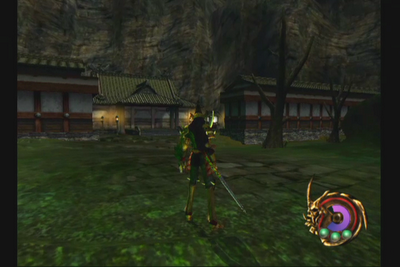
       Another feature that the Game Capture HD lacks is the ability to adjust the brightness and contrast of the video being recorded, and although it’s nothing major, it should really have been a standard feature in the box’s settings. While the box does record a crisp image that quality wise is great, the video and the screenshots do turn out to be pretty dark compared to the image being viewed on the TV. Whether AverMedia never thought to add brightness and contrast settings, or whether they thought the user could adjust these in game or even on the console end, who the hell knows? But the fact remains that the video does turn out way too dark, and this is another thing that could have easily been addressed, and it could still be addressed in a future firmware update. The only way at the moment to remedy this is to post process the video or screenshots via video editing software for the former (or Youtube if you plan on uploading) and something like Paint.NET for the latter, all of which will fix the brightness issues and make the image as it should be.

    Otagi - Xbox - Post render using Paint.NET
    Otagi - Xbox - Original Screenshot pre-render
       It’s a shame that the Game Capture HD has the small issues that it has, if AverMedia could only have gone that extra mile, it would make all other capturing devices on the market worthless, it really could have been the all conquering solution. But having said that using this all-in-one video capture box is a far better solution to capturing current gen gaming footage in my opinion, as there is nothing worse than having the major headache of setting up your console next to the PC just to capture some video. What the Game Capture HD is in essence is pure convenience as opposed to other devices that require a PC, which are quite honestly the total opposite. The Game Capture HD is definitely worth purchasing even with its small faults, and I am certainly happier and better off using it over the cumbersome irritation of other devices period.

    Otagi - Xbox - Original Screenshot pre-render
    Otagi - Xbox - Post render using Paint.NET

    Share

    Twitter Delicious Facebook Digg Stumbleupon Favorites More